Krk’s journey to zero waste (Croatia)
Marko Košak, Manon Jourdan, décembre 2025
In the heart of the Adriatic, the island of Krk proves that even in a context of intense tourist activity, zero-waste management is possible. With its 20,000 residents and 120,000 daily visitors in summer, Krk has succeeded in turning its challenges into opportunities, becoming Croatia’s first certified Zero Waste island in 2024 and the second in the world.
Driven by close collaboration between the public waste management company Ponikve, the island’s seven municipalities and the NGO Zelena Akcija, this transition illustrates how a shared vision, appropriate infrastructure and community engagement can turn waste management into a driver of sustainability and quality of life.
Its story is one of collective success, in which every stakeholder – residents, tourists and businesses – plays a key role.
À télécharger : en-zwe-case-study-krks-journey-to-zero-waste.pdf (5,1 Mio)
Krk, the Croatian island reinventing zero waste
A tourist paradise facing a challenge: waste management
Krk, Croatia’s jewel in the Adriatic Sea, is a microcosm of modern challenges: how can tourist appeal, environmental conservation and quality of life for residents be reconciled? With 914,000 visitor arrivals and 5 million overnight stays in 2024, the island faces enormous seasonal pressure on its resources. However, thanks to strong political will and an innovative approach, Krk has managed to reverse the trend. As early as 2020, Ponikve, the company responsible for waste management across the seven municipalities, partnered with Zelena Akcija(note) 1 (Friends of the Earth Croatia) to analyse the shortcomings of the existing system and identify concrete solutions.
In July 2021, Krk officially applied for the Zero Waste Cities certification from the Mission Zero Academy (MiZA), marking the start of an ambitious plan: to reduce waste, improve waste sorting, and involve the whole community. Unlike other projects where political differences can hinder progress, the municipalities of Krk have worked hand in hand, with a rigorous cost-benefit analysis guiding every decision. The result : in October 2024, the island achieved its Zero Waste certification, becoming a model for European tourist destinations.
An ambitious and collaborative Zero Waste plan
Krk’s Zero Waste Plan is based on clear objectives:
-
To divert 70 per cent of municipal waste from landfill and incineration within five years, rising to 90 per cent in the long term, by prioritising reuse, recycling and composting.
-
To reduce residual waste per capita by 35 per cent compared with 2019 (235 kg per capita per year), to reach 150 kg per capita per year by 2027.
To achieve this, Krk has introduced a number of key measures :
-
A door-to-door collection system (D-t-D) extended across the whole island, with bins of various sizes (20 to 240 L) for each type of waste (biowaste, paper, plastic, glass, residual waste).
-
A pay-as-you-throw system (PAYT) : users pay according to the amount of residual waste they produce, using bins fitted with RFID chips and semi-underground containers with volume meters.
-
Recycling centres (7 across the island) for waste not collected via door-to-door collection, such as textiles, electronic waste or hazardous waste.
-
An annual campaign to distribute free compost to reward residents who sort their organic waste. In 2023, more than 5,000 bags of compost were distributed.
Tangible and inspiring results
The figures speak for themselves :
-
Between 2006 and 2024, per capita residual waste generation fell from 563 kg to 263 kg (22 per cent below the national average).
-
The separate collection rate rose from 18.2 per cent in 2006 to 57 per cent in 2024, with a bio-waste sorting rate of 70 per cent (and less than 5 per cent contamination).
-
The reduction in fly-tipping has been spectacular: in the town of Krk, the costs of clearing illegal dumps fell from €10,030 in 2012 to €3,980 in 2023, a 60 per cent decrease.
This progress can be attributed to a combination of factors :
-
Modern infrastructure : sorting centres, a composting plant (due to be modernised in 2025), and an expanded fleet of collection vehicles.
-
An economic incentive scheme : the Pay-As-You-Throw (PAYT) scheme encourages residents to sort their waste more effectively, whilst revenue from the sale of recycled materials (paper, plastic, metal) increased by 33 per cent between 2010 and 2024, rising from €265,240 to €352,164 per year.
-
Ongoing awareness-raising : workshops in schools, annual campaigns focusing on one type of waste each year, the distribution of 50,000 leaflets translated into eight languages, and even ‘ eco-patrols ’ that check bins and advise users.
Waste prevention : a central pillar
Krk does not merely manage its waste : it prevents it. Among the key initiatives :
-
Reducing single-use plastics : replacing disposable bottles and cups with water fountains in public institutions, and transforming plastics collected from beaches into benches, bins or reusable bags (the ‘ Blue Bags ’, distributed to tourists).
-
Reuse and repair : setting up bicycle repair stations, dedicated areas in recycling centres for reusing items, and customisation workshops with local organisations (such as Rukotvorine Krk, which transforms used textiles into new products).
-
Zero-waste events : collaboration with tourist boards to eliminate single-use plastics at festivals (such as the Krk Music Fest), and promotion of bulk-buy shops.
Persistent challenges and lessons to be learnt
Despite these successes, Krk still faces challenges :
-
Tourism pressure : the seasonal influx of visitors automatically increases the volume of waste, particularly bulky waste (up by 22.5 per cent in 2024).
-
Human resources : recruiting qualified staff for waste management remains difficult.
-
Financial constraints : the costs of separate collection and recycling are rising, whilst the markets for recycled materials remain unstable.
However, the lessons from Krk are clear :
-
The importance of collaboration : involving all stakeholders — local authorities, businesses, tourists and organisations — is essential to ensure their buy-in and contribution.
-
The effectiveness of local infrastructure : sorting centres, composting and PAYT are powerful tools for reducing waste.
-
The need for ongoing education : without raising awareness, even the best infrastructure will fail.
What about the future ? Towards a 100% zero-waste island
The Zero Waste certification achieved in 2024 is just the first step for Krk. Recognising that zero waste is a never-ending journey, the island has already mapped out its sustainable future, with ambitious projects aimed at strengthening its system, further reducing its waste and inspiring other regions.
Modernising infrastructure for greater efficiency
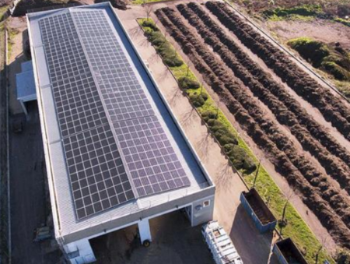
One of Krk’s major challenges remains its waste processing capacity, particularly for bio-waste and recyclable materials. In 2025, the island’s composting plant will be modernised to speed up the process and improve the quality of the compost produced. This improvement will enable the processing of greater volumes of organic waste, whilst reducing operational costs. At the same time, the sorting centre will be equipped with robotic arms to automate the sorting of recyclable materials (plastic, paper, metal), a new dynamic screen to optimise separation, and dust filters to improve working conditions and reduce the environmental impact. These investments, partly funded by European funds, will enable Krk to manage growing volumes of sorted waste, whilst reducing its reliance on regional centres, which are often costly and inefficient.
A repair and reuse centre to combat waste
Faced with a 22.5 per cent increase in bulky waste by 2024, Krk has decided to take action by opening a repair and reuse centre. This facility, which will be open to residents and tourists, will enable people to :
-
Repair everyday items (furniture, household appliances, bicycles) to extend their lifespan and prevent them from ending up in landfill.
-
Refurbish used electronic devices or furniture for resale at reduced prices, thereby creating a local circular economy.
-
Organise workshops to teach residents how to repair their own items, thereby strengthening the culture of reuse.
This centre is part of a waste prevention strategy: by reducing the volume of bulky waste, Krk hopes to lower processing costs (currently €260 per tonne) and create local jobs in the repair sector.
Understanding the impact of tourism to take targeted action
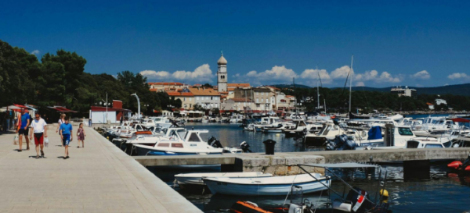
Tourism is both a source of wealth and a challenge for Krk. To better understand its impact on waste generation, the island is set to launch a detailed study analysing the correlation between the influx of tourists and the volumes of waste produced. This study will help to identify :
-
Critical periods (such as the summer, when the island welcomes up to 120,000 visitors a day).
-
The most problematic types of waste (plastic packaging, food waste, etc.).
-
Behaviours to target (for example, food waste in hotels or litter left on beaches).
Using this data, Krk will be able to tailor its awareness campaigns and strengthen its infrastructure at the times and in the places where pressure is greatest.
100% zero-waste events Krk aims to go further by eliminating single-use plastics at all public events organised or co-funded by local authorities. This measure is part of a commitment to lead by example and encourage private organisers (hotels, restaurants, festivals) to adopt sustainable practices. For example, the Krk Music Fest has already introduced reusable cups, and the island plans to extend this initiative to all gatherings, in collaboration with tourist boards and local associations.
A campaign against food waste
In 2026, Krk will launch an ambitious campaign to reduce food waste, targeting four key groups :
-
Schools : educating children on the importance of not wasting food and on best practices (such as composting).
-
Restaurants and hotels : training staff in stock management and the reuse of leftovers (donations to charities, composting, etc.).
-
Households : distributing practical guides and organising cookery workshops}} to teach people how to cook without waste.
-
Supermarkets : partnerships to promote bulk products and reusable packaging.
This campaign will be based on analyses of waste composition, which have revealed that significant quantities of food still end up in the bin. By acting on this lever, Krk could significantly reduce the proportion of organic waste in its residual waste streams.
A model for Europe and beyond
Krk is not content merely with transforming its own system : it is already inspiring other local authorities.
Its model has attracted the interest of numerous Croatian municipalities, such as the islands of Cres (which opened a recycling centre in 2020 and is planning a composting plant) and Rab (which has adopted door-to-door collection). Even on the mainland, towns are drawing inspiration from its collaborative and innovative approach.
As Marko Košak, vice-president of Zelena Akcija, points out:
“ The example of Krk shows that it is possible to achieve excellent results, even in municipalities heavily impacted by tourism. The key to success lies in implementing numerous zero-waste measures, as well as in close collaboration between all stakeholders. We are proud of our cooperation with Ponikve and the municipalities on the island of Krk, and we continue to take bold steps towards even better results. ”
Through these projects, Krk is not merely reducing its waste : it is reinventing its future, making zero waste a tangible reality and a model for tourist destinations around the world.
1 In Croatia, the member organisation of the international Friends of the Earth federation is Zelena akcija (Green Action), which was founded in 1990 and is based in Zagreb. This non-governmental organisation actively campaigns for environmental protection and sustainable development.
Références
Websites:
-
Zero Waste Europe : www.zerowasteeurope.eu
-
Mission Zero Academy : www.missionzeroacademy.eu
-
Friends of the Earth : www.foei.org/fr/groupes-membres/croatie/
-
The Zelena akcija association : zelena-akcija.hr/en