REUSEABLE - Aarhus’s pioneering reusable takeaway packaging system
2026
REUSEABLE is Aarhus’s pioneering reusable takeaway packaging system, transforming how the city tackles single-use waste. Launched in 2024, this circular economy initiative—a collaboration between the municipality, TOMRA, and 50+ local businesses—lets customers borrow durable polypropylene cups for a small refundable deposit, then return them to 24/7 automated kiosks with a simple card tap.
REUSEABLE offers cities a scalable, no-registration model to cut waste—though long-term financial viability and political support remain key to its success.
Urban practice summary
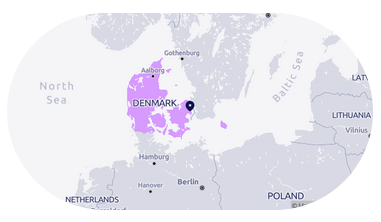
The Municipality of Aarhus, in collaboration with TOMRA and local restaurants and cafés, has launched REUSEABLE, an innovative reusable takeaway packaging system designed for the city centre. Participating retailers offer REUSEABLE cups made of durable, recyclable polypropylene to customers for a refundable deposit of 5 DKK (EUR 0,67). Customers can then return their cups to any of the numerous automated collection points for REUSEABLE in Aarhus, all of which are open 24/7. Clients get their deposit back easily by tapping their credit card or smartphone on the machine’s scanner, while cups are sent back to a sanitization hub where they are cleaned before being used again. With proper care, a plastic cup can be reused hundreds of times, making it a sustainable and long-lasting option. The project now includes over 50 partners across Aarhus. In its second year, the pilot introduced a new collection machine that accepts both reusable cups and food packaging, further reducing waste.
Context:
The REUSEABLE project addresses the growing need to save resources, reduce waste and promote a cleaner city environment in the City of Aarhus. Approximately half the waste collected from street cleaning and public waste bins is from takeaway food packaging, with plastic to-go cups as one of the most common items. The project aims to reduce single-use packaging, initially focusing on plastic to-go cups, and will be expanded to cover other types of takeaway food containers.
Key stakeholders: Municipality of Aarhus, TOMRA Reuse, cafes, bars, restaurants, residents, visitors.
Timeline: 2024 - 2027
Budget: €500,000 and a full-time employee over the entire project duration
The municipality of Aarhus signed the GCA in 2022
Succes factors
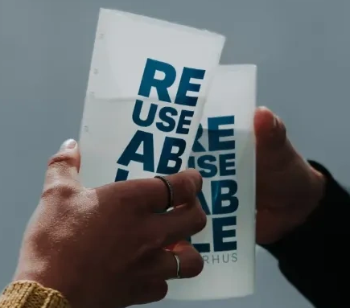
The system is easily replicable in various locations and compatible with restaurants, cafes, and all food takeaway services. It is also meant to be convenient to use for both residents and visitors, with no need for special apps or personal registration. On top of that, Aarhus restaurants and bar staff have been implicated in educating and convincing people to choose REUSEABLE.
Challenges
The remaining challenges start with the resistance to change: convincing companies to move away from traditional and single-use models, often perceived as more cost-effective, to resusable alternatives proved challenging. There are also permitting constraints: securing timely permits for the machines was challenging due to multiple approval requirements and operational needs (e.g. reliable electricity access, wiring, and easy on-site access). Regarding policy and regulatory barriers, we witness limited political engagement and a lack of supportive regulatory framework hindered implementation and a wider deployment, despite technical readiness for a large-scale deployment. This also goes hand in hand with the financial sustainability: the main challenge now is to make the model financially viable in long term without reliance on public subsidies, which were critical during the pilot phase.
Results and impact
Results (achieved or expected)
Between January 2024 and December 2025, over 1,6 million REUSEABLE cups returned by residents, with 91% return rate. As of June 2025: 2,500 cups and mugs returned each day on average. There was a visible environmental impact, with equivalent of approximately 16,000 trash bins of disposable cups saved, significantly reducing waste volume in Aarhus.
Evidence of success
TOMRA conducted a satisfaction survey one year after the launch of the project, with positive results: 84% of residents using REUSEABLE reported being satisfied or very satisfied with the system, and only 3% unsatisfied. As of today, 53 retails partners are participating in the initiative, indicating significant interest from the local businesses. Between January 2024 and December 2025, the system has generated an estimated +18.6 tons of CO₂ savings.
Recommendations for other cities
Potential for learning or transfer
Secure strong political backing:
-
Implementing reuse systems requires clear and sustained political support.
-
A committed City Council is essential to unblock decisions, align municipal services, leverage public procurement and maintain momentum over time.
Design for scale from the outset:
-
Financial and operational viability depends on achieving high reuse volumes.
-
Cities should plan early to secure broad participation from businesses, venues, events, and public procurement, so the system operates at the scale required to be sustainable.
Transition from pilot to full deployment:
-
Focus on scaling: the concept is proven and ready to implement.
-
Additional pilots are not necessary – prioritise deployment and expansion.
Sources
To go further
Website : www.reuseable.dk/