Urban regeneration and development project for Lake Nord in Tunis (Tunisia)
Circular and resilient water management in urban areas
August 2025
ICLEI-Local Governments for Sustainability
To the north of Tunis, the rehabilitation of Lac Nord has transformed a degraded lagoon into a hub for sustainable urban development, combining ecological restoration, water management and economic appeal.
This project, carried out through a public-private partnership (PPP), demonstrates how the regeneration of an ecosystem can act as a catalyst for local development, whilst improving the region’s water resilience.
Driven by an integrated vision, this project illustrates how collaboration between public and private sector stakeholders can create sustainable, resilient and economically viable spaces.
This factsheet summarises one of the 12 case studies in the document: Circular and Resilient Water Management in Urban Areas
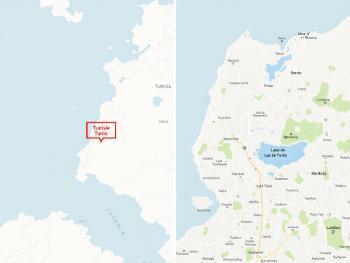
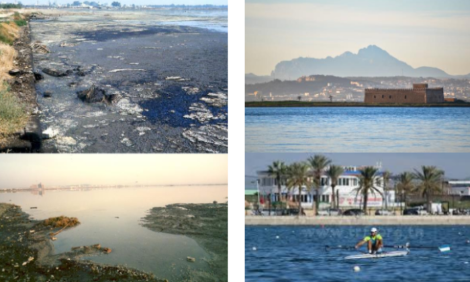
Lake North of Tunis, a 3,800-hectare coastal lagoon, was once a degraded ecosystem, suffering from pollution, erosion of its banks and a lack of sustainable management. Located in a metropolitan area with a population of over 2 million, this lake posed a major challenge to water resilience and urban development in the Tunisian capital. Industrial and domestic pollution, combined with uncontrolled urbanisation, had turned the area into a hotbed of environmental problems, with negative impacts on public health and biodiversity.
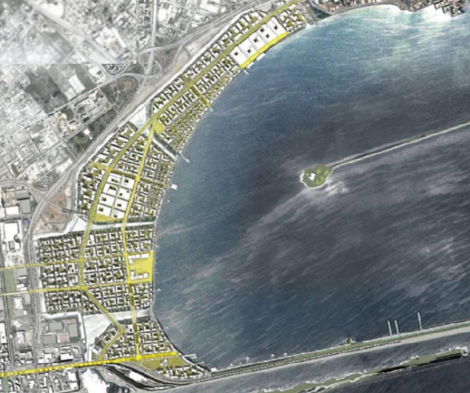
The North Lake rehabilitation project has transformed this lagoon into a hub for sustainable urban development, combining ecological restoration, water management and economic appeal. Carried out through a public-private partnership (PPP), this project demonstrates how the regeneration of an ecosystem can serve as a catalyst for local development. The aim was to restore water quality, create public spaces and boost the local economy, whilst improving the region’s climate resilience.
Solutions implemented
-
Ecological restoration : Restoration of riverbanks, water treatment and creation of wetlands to improve water quality and promote biodiversity.
-
Public-private partnership (PPP) : Funding and management shared between public authorities (Tunis City Council) and private investors (property developers, local businesses).
-
Integrated urban development : Creation of public spaces, housing, tourist infrastructure and commercial areas around the lake, thereby transforming the area into an economic and social hub.
-
Sustainable water management : Reuse of treated water for the irrigation of green spaces and other non-potable uses, thereby reducing pressure on freshwater resources.
Key results
-
Restoration of 36,000 m³ of groundwater storage capacity, thereby improving the region’s water security.
-
Creation of an economic hub : The project has attracted investment in property and tourism, thereby stimulating local economic development.
-
Improvement in biodiversity : The restoration of wetlands and riverbanks has enabled the return of aquatic and avian species, contributing to the restoration of local ecosystems.
-
Successful PPP model : The project has demonstrated the feasibility of public-private partnerships for ecological rehabilitation, inspiring other initiatives in North Africa and internationally.
First phase : 1984–1988 – Clean-up of the lake & restoration of the riverbanks
Climate and environmental impacts
-
Climate change mitigation :
- The restoration of ecosystems (wetlands, riverbanks) helps to sequester carbon, thereby reducing CO₂ emissions.
- The reuse of treated water reduces the demand for fresh water, thereby lowering the energy consumption associated with pumping and transporting water.
-
Climate adaptation and resilience :
- Flood management : Restored wetlands act as natural buffers, absorbing excess water during heavy rainfall and thereby reducing the risk of flooding.
- Improved water quality : Water treatment and the creation of wetlands improve water quality, thereby protecting aquatic ecosystems and public health.
-
Biodiversity : The restoration of riverbanks and wetlands has enabled the return of local species, contributing to the restoration of biodiversity in a previously degraded area.
Success factors
-
Values :
- Recognition of the ecological and economic value of restored ecosystems.
- Integration of sustainability as a pillar of urban development.
-
Connections :
- Physical connections : Ecological infrastructure (wetlands, riverbanks) is integrated into the urban fabric, creating a coherent network for water management and biodiversity.
- Social connections : Collaboration between the public sector, the private sector and civil society to design an inclusive and sustainable project.
-
Investments :
- Blended finance : The project received funding from both the public sector (the Tunisian government and the local council) and the private sector (property investors and local businesses).
- Sustainable economic model : Economic returns (property investments, tourism) have helped to finance the long-term management of the project.
Replicability for Morocco
The Tunis model could inspire wetland or lake restoration projects in Morocco, such as Lake Marchica (near Nador) or the degraded coastal areas around Casablanca or Tangier. By combining ecological restoration, PPPs and urban development, these projects could improve water resilience and create sustainable economic hubs.
For example, at Marchica, where the lake suffers from industrial and domestic pollution, adopting this model would help restore water quality, create public spaces and boost the local economy, whilst improving the region’s climate resilience.
Sources
Online document, see pages 112 to 122 : Gestion circulaire et résiliente de l’eau en milieu urbain - Circular and resilient water management in urban areas
To go further
Websites : iclei.org/ & iclei-europe.org/
Bibliography
1. Al Buhaira Invest. (29 avril 2023). Avis d’appel d’offres N° 03/2023 www.albuhairainvest.com/2023/04/29/avis-dappel-doffres-n-03-2023/
2. Al Buhaira Invest. (n.d.). Al Buhaira Invest: A success story [Une réussite exemplaire]. www.perledulac.tn/en/al-buhaira-invest
3. Institut arabe de développement urbain. (s.d.). La Perle du Lac. araburban.org/en/infohub/projects/
4. Archi Mag. (11 juillet 2023). Démarrage des travaux de la Perle du Lac 2. Archi Mag. archimag.tn/2023/07/11/demarrage-des-travaux-de-la-perle-du-lac-2/
5. Bouguerra, T., & Batimat, T. (2013). Projet du lac nord de tunis un grand projet d’environnement et d’aménagement urbain intégré realisations et projets futurs. Société de promotion du lac de tunis. www.leaders.com.tn/uploads/FCK_files/Lac de Tunis Bouguerra Tarek Batimat 2013.pdf
6. Climate-Data.org. (n.d.). Tunis. en.climate-data.org/africa/tunisia/tunis/tunis-502/
7. Hagui, A. (2012). The process of creation of the new cities in Tunisia: Case of the city of the Lake of Tunis. Journal of Geography and Regional Planning [Le processus de création des nouvelles villes en Tunisie : le cas de la ville du Lac de Tunis. Journal de géographie et d’aménagement du territoire]. doi.org/10.5897/JGRP12.0098
8. Rezgui, A., Ben Maiz, N., & Moussa, M. (2008). Fonctionnement hydrodynamique et écologique du Lac Nord de Tunis par modélisation numérique [Hydrodynamic and ecological functioning of the Tunis North Lake by a numerical modelling approach]. Revue des sciences de l’eau / Journal of Water Science. doi.org/10.7202/018781ar
9. Saber, J. (2021). Al Buhaira Invest : une belle expérience réussie en PPP aux Berges du Lac Nord, Tunis. jamelsaber.com/al-buhaira-invest-une-belle-experience-reussie-en-ppp-aux-berges-du-lac-nord-tunis/
10. Sarra, A. (2018, February 12). Urbanisme : Plan de la SPLT pour animer le Lac de Tunis. Webmanagercenter. www.webmanagercenter.com/2018/02/12/415316/urbanisme-plan-de-la-splt-pour-animer-le-lac-de-tunis/
11. Société de Promotion du Lac de Tunis (SPLT). (n.d.). Aménagement de la rive nord du lac de Tunis (phases 1 et 2). Studi. www.studi.com.tn/site/en/Projects/urban-development-urban-roads-interchanges-and-bridges/development-of-tunis-lake-northern-bank-phase-1-and-2.355.html
12. Trabelsi‐Bahri, E. L., Armi, Z., Trabelsi‐Annabi, N., Shili, A., & Ben Maiz, N. (2013). Water quality variables as indicators in the restoration impact assessment of the north lagoon of Tunis, South Mediterranean [Les variables de qualité de l’eau comme indicateurs dans l’évaluation de l’impact de la restauration de la lagune nord de Tunis, en Méditerranée sud]. Journal of Sea Research, 79, 12–19. doi.org/10.1016/j.seares.2013.01.003
13. Transnational Institute. (2023). The World Bank’s water and sanitation policies in Tunisia [Les politiques de la Banque mondiale en matière d’eau et d’assainissement en Tunisie]. www.tni.org/en/article/the-world-banks-water-and-sanitation-policies-in-tunisia
14. Programme des Nations Unies pour les établissements humains (ONU-Habitat). (2016). National report for the United Nations Conference HABITAT III [Rapport national pour la Conférence des Nations Unies HABITAT III]. habitat3.org/wp-content/uploads/National-report-for-the-united-nations-conference-HABITAT-III.pdf
15. Wikipédia (s.d.). Tunis. Wikipédia. en.wikipedia.org/wiki/Tunis
16. World Population Review. (n.d.). Tunis. worldpopulationreview.com/cities/tunisia/tunis