Giving rivers back their space
Selecting, designing and implementing Natural Water Retention Measures in Europe (MNRE) : hydromorphology
European Commission, February 2023
In Europe, 80 per cent of watercourses have been altered by human activity: channelled, straightened, separated from their floodplains… These developments, carried out to gain agricultural land, facilitate navigation or speed up drainage, have profoundly disrupted the natural dynamics of rivers. The result: faster-rising floodwaters, loss of biodiversity, deterioration in water quality, and the disappearance of wetlands.
Natural Water Retention Measures (NWRM) in hydromorphology aim to restore these dynamics by giving watercourses back their space. Whether through meander restoration (N4), wetland restoration (N2) or the removal of weirs (N9), these practices help to slow down water flow, store water during floods, and restore resilient aquatic ecosystems. They meet the objectives of the Water Framework Directive, the Floods Directive and the European Biodiversity Strategy.
What if, rather than dominating rivers, we learnt to live with them ?
This factsheet summarises the topic ‘hydromorphology’ from the document ‘Selecting, Designing and Implementing Natural Water Retention Measures in Europe (MNRE)’. See the three other factsheets on: Agriculture, Forestry, Urban
To download : mesures-naturelles-de-retention-deau-en-europe_fr.pdf (8.4 MiB)

The issues : Why restore watercourses ?
Human development has profoundly disrupted the balance of aquatic ecosystems. One of the most visible consequences is the acceleration of flood flows : channelled rivers discharge water too quickly, increasing the risk of flooding further downstream.
The loss of biodiversity is just as worrying. The disappearance of meanders, wetlands and floodplains has led to the decline of many species, from fish and amphibians to aquatic insects.
Another major problem is the deterioration in water quality. By straightening riverbeds and removing buffer zones, we have reduced rivers’ natural ability to filter out pollutants such as nitrates, phosphates and heavy metals.
Finally, the loss of ecosystem services takes a heavy toll. Wetlands, once ubiquitous, played a key role in regulating water flows, natural purification and even carbon sequestration. Their disappearance has deprived ecosystems of an essential regulatory mechanism.
NWRM solutions for restoring aquatic environments
Restoring natural storage capacity
Wetlands (N21) act as natural sponges: they store water during floods and gradually release it during dry periods. Restoring them not only reduces flood peaks – by up to 47 per cent in some cases, such as in Finland – but also improves water quality by filtering out pollutants. For example, the restoration of the Amalvas and Zuvintas wetlands (Lithuania) has significantly reduced the risk of flooding whilst recreating habitats for endangered species.
Similarly, floodplains (N3) – those naturally flood-prone areas along riverbanks – play a comparable role. Reconnecting them to the watercourse allows large quantities of water to be stored and slows down the flow. In Croatia, the restoration of the floodplain in the Lonjsko Polje Nature Park has thus reduced peak flows by 38 per cent.
Restoring the natural dynamics of watercourses
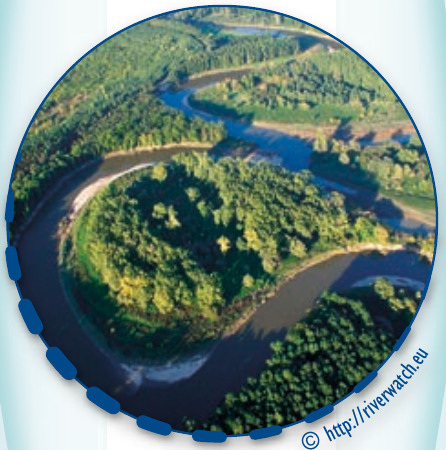
Meander restoration (N4), which involves recreating meanders or reconnecting existing ones, helps to lengthen the watercourse and slow its flow. This measure also enhances habitat diversity – including still waters, rapids, etc. – and thus promotes biodiversity. The restoration of the River Hermance (France) is a perfect example of this: it has helped to recreate a dynamic river ecosystem, with tangible benefits for fish, birds and water quality.
At the same time, the renaturalisation of the river channel (N8) and the restoration of seasonal watercourses (N6) aim to restore a natural morphology. This involves the removal of dams (N9) or artificial bank protection (N11), measures which reduce erosion, improve ecological connectivity and facilitate the migration of aquatic species.
Managing sediments and improving water quality
Water reservoirs and ponds (N1) play a key role in storing runoff and promoting its infiltration. In the Belford catchment (United Kingdom), these measures have contributed to reductions in peak flows of between 15 and 30 per cent.
Sedimentation basins (F9, applicable in hydromorphology) and surface runoff areas (F14), meanwhile, help to trap sediment and reduce particulate pollution. These solutions are particularly effective in agricultural or forested areas located upstream of watercourses.
Implementation :
Challenges and opportunities
NWRM measures in hydromorphology apply at several scales. At the local scale, priority should be given to river meandering (N4) or the removal of weirs (N9). At the landscape scale, wetland restoration (N2) and the reconnection of floodplains (N3) are essential. Finally, at the catchment scale, coordination between stakeholders enables integrated and coherent management.
Costs and funding
Wetland restoration (N2) may require significant investment, particularly for land acquisition or development works. However, the benefits – reduced flood risk, improved biodiversity – are long-lasting and often outweigh the costs incurred. For example, river meandering restoration (N4) costs around 0.4 million euros per kilometre of river, but the savings achieved through reduced flood damage more than justify this investment.
Barriers and drivers
Barriers include land tenure complexity (multiple landowners), resistance from local stakeholders (fear of change) and high initial costs.
Conversely, there are numerous drivers : European grants (LIFE, ERDF), awareness-raising (feedback on experiences) and the valuation of ecosystem services (payments for water retention).
Multiple benefits : Beyond water management
NWRM measures in hydromorphology generate a cascade of positive effects.
In terms of climate, wetlands (N2) store enormous quantities of carbon – up to 40 per cent of terrestrial reserves.
In terms of biodiversity, river meandering (N4) and the restoration of floodplains (N3) recreate diverse habitats that are essential for aquatic and riparian species.
Economically, reducing flood risks generates substantial savings for local authorities and insurance companies.
Finally, from a social perspective, restored watercourses provide recreational spaces (fishing, walking) and significantly improve the quality of life.
Conclusion : Towards integrated watercourse management
Natural Water Retention Measures in hydromorphology demonstrate that watercourse restoration is an investment in the future. By giving rivers back their space, these practices offer sustainable and multifunctional solutions :
-
Reducing flood risks by storing and slowing down water.
-
Improving water quality by filtering out pollutants.
-
Restoring biodiversity and aquatic ecosystems.
-
Combating climate change through carbon sequestration.
To ensure their widespread adoption, it is essential to :
-
Raise awareness amongst local stakeholders (farmers, elected representatives, local residents).
-
Simplify access to funding (grants, public-private partnerships).
-
Integrate these measures into water policies (SDAGE, SAGE, river management agreements).
What if the river of tomorrow were one that, rather than being tamed, were finally free to fulfil its natural role ?
1 : see the summary on the topic of Hydromorphology (in French): N1 – Water reservoirs and ponds – N2 – Restoration and management of wetlands – N3 – Restoration and management of floodplains – N4 – River meandering - N5 – Renaturalisation of river channels – N6 – Restoration and reconnection of seasonal watercourses – N7 – Reconnection of oxbow lakes and similar features – N8 – Renaturalisation of river channels – N9 - Removal of dams and other longitudinal barriers - N10 - Natural bank stabilisation - N11 - Removal of bank protection - N12 - Lake restoration - N13 - Restoration of natural infiltration into groundwater - N14 - Renaturalisation of polder areas
Sources
-
European Commission document : Selecting, designing and implementing Natural Water Retention Measures in Europe (MNRE),
available on the website : www.sgle.fr/wp-content/uploads/2024/02/Mesures-naturelles-de-retention-deau-en-Europe_compressed.pdf
-
Website : Syndicat Grand Lieu Estuaire
To go further
-
NWRM Project : nwrm.eu/measures-catalogue
-
Water Framework Directive : European Commission website
-
Water agencies (France) : www.lesagencesdeleau.fr/