Delhi’s action to encourage widespread electric vehicle use
2026
Delhi, choked by air pollution, has taken radical measures to accelerate the uptake of electric vehicles.
With 23 per cent of urban emissions linked to transport during the winter months, the city has introduced an ambitious policy (2026–2030) to phase out internal combustion engine vehicles. From 2027, only electric tuk-tuks will be eligible for registration, followed by two-wheelers in 2028. This transition is accompanied by degressive subsidies, tax incentives and a massive infrastructure plan (1,400 charging points to be installed). A bold roadmap to make Delhi a model of clean mobility.
A case study taken from the report: How cities are tackling fossil fuels (see the linked sheet)
To tackle the significant contribution of vehicular emissions to air pollution, which is 23% during winter months, the Delhi government has moved from incentive schemes to implement strict registration mandates.
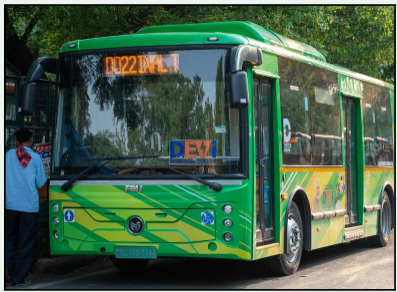
The Delhi Electric Vehicle Policy (2026-2030) sets a definitive timeline for the transition: starting 1 January 2027, only electric three-wheelers will be permitted for new registration. This is followed by an even broader mandate on 1 April 2028, requiring all new two-wheeler registrations to be electric. Furthermore, the schools in NCT of Delhi must comply with tiered electrification targets for school bus fleets, aiming for 10% by the end of the second year and reaching 30% by 31 March 2030.
Fleet aggregators and delivery providers face immediate restrictions, with a ban on inducting new conventional internal combustion engine vehicles as of 1 January 2026. Public sector leadership is also mandated, as all new hired, leased, or purchased vehicles for government departments and intra-state buses must be electric from the date of the policy’s notification.
The policy employs a declining purchase incentive structure designed to reward early adopters. For example, for two-wheelers the subsidy begins in the first year at INR 10,000 (approx USD 106) per kWh (up to INR 30,000 approx USD 320) and reduces annually until it reaches INR 3,300 per kWh in the third year. Similar tapering applies to electric three-wheelers and light goods vehicles.
To modernise the existing fleet, substantial scrapping incentives are offered. These financial benefits are bolstered by tax relief, most EVs that fall into the lower price bracket are granted a 100% exemption from road tax and registration fees until March 2030, while strong hybrid vehicles receive a 50% exemption.
A robust infrastructure plan is central to the 2026-2030 policy. Delhi Transco Limited will act as the nodal agency for planning, demand aggregation, coordination, creating a single window facility and implementation of public electric vehicle charging and battery swapping infrastructure in the National Capital Territory of Delhi.
By combining strict registration mandates for two- and three-wheelers with a tapered incentive structure, the government expects to drive early adoption while establishing a self-sustaining EV ecosystem.
Modern energy supplies
Cities are pivotal in transitioning to flexible, renewable-based energy systems, enhancing electricity access, grid reliability, and local energy security. They achieve this by leading or contributing to renewable energy plans, such as Amsterdam’s Heat Transition Vision, which aims to shift 550,000 homes and offices from fossil gas to sustainable heating by 2040. In the UK, nearly 100 local governments collaborate on costed Local Area Energy Plans to transform energy systems and infrastructure.
Cities also leverage local energy networks to drive renewable installations. Reykjavík, San Francisco, and Seattle, for instance, partner with regional utilities to deploy renewable assets. Medellín’s Empresas Públicas de Medellín reinvests 30-50% of its profits into public services, education, and urban development, benefiting underserved areas with projects like cable cars and water treatment plants.
To accelerate renewable adoption, cities support residents and businesses in installing renewable systems. Chennai’s roadmap for rooftop solar includes tariff revisions, financial solutions, and awareness campaigns, while Cape Town’s SSEG program allows power export to the grid for credit. Funding new renewable infrastructure, such as Melbourne’s wind farms via Power Purchase Agreements, or Qingdao’s innovative Li Cun River project—extracting thermal energy from sewage—further demonstrates how cities are expanding renewable energy coverage, like Qingdao’s 173 km² of heating now powered renewably.
Referencias
Extract from pages 18 to 20 of the document: How cities take action on fossil fuels
Para ir más allá
C40 Cities : www.c40.org/