Cities100: Milan is building Italy’s first zero-carbon social housing project
C40 Cities Climate Leadership Group, Nordic Sustainability, October 2019
A new social housing project in Milan aims to be zero-carbon by 2050. The buildings will use energy, heating, and cooling from renewable sources, 100% reused water, and be built with green roofs.
The surrounding area aims for 60% green spaces and is accompanied by a green mobility strategy that has just one parking spot for every seven residents, as well as goals to keep the air clean. Milan is showcasing what the blueprint for sustainable housing districts looks like.
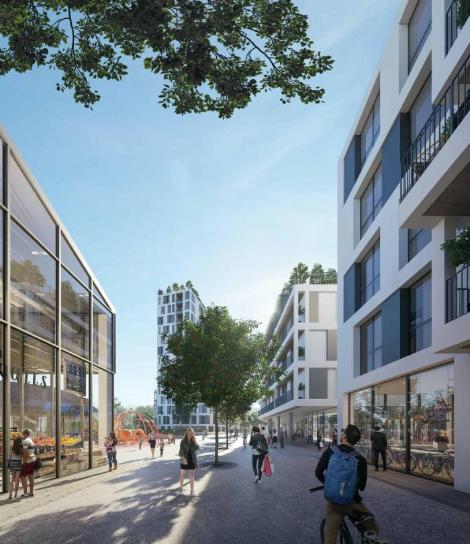
In recent years, Milan has significantly increased its ambitions and goals for a resilient city. One of its projects is L’INNESTO: the first zero-carbon social housing project in Italy. The project is a showroom for Milan’s new sustainability strategies. One of these strategies is the development of an innovative, fourth-generation district heating system powered by renewable sources, which includes an urban wastewater heat-recovery system. This district heating system will enable the social housing project to be carbon neutral in 30 years.
The district is designed with nearly zero-energy buildings combined with pre-assembled construction technology with an optimal bio-based material mix, allowing structures to be disassembled and fully recycled at the end of their life. The aim is a long-term, responsible, resilient management of resources, spaces, and the community. Plans for the new district include building 400 units totalling 21,000 m2, a residence for 300 students, 3,000 m2 for commercial activity, and 45,000 m2 of green areas including vegetable gardens, a nursery garden, green roofs, and edible landscapes.
Milan developed this project as part of the Reinventing Cities initiative. Find project’s background and full details here.
This is one of the 100 solutions highlighted in the 2019 edition of Cities100. Now in its fourth year, Cities100 provides recognition for 100 of the boldest projects from cities around the world which are working to address climate change and build a better, greener future. The publication highlights solutions that are replicable and scalable, and which reduce emissions and address the issues that cities face as a result of climate change. Read the Cities100 report, by C40 and Nordic Sustainability, for full details.
Milan’s advice for other cities
Design social housing districts with climate change in mind
The new social housing district is designed to mitigate the shock and stress caused by the impact of extreme weather events such as heat waves and intense rainfall. The project will include sustainable water resource management for the entire water cycle: onsite reuse of rainwater for irrigation and interception of rainwater from extreme events thanks to green roofs and stormwater tanks. Green spaces and new spaces for biodiversity and urban reforestation will mitigate biodiversity loss and sequester carbon.
Value people over cars in your mobility strategy
The project has an ambitious mobility strategy: limiting car parking spaces (only 100 spaces for 700 tenants) and including a 1,200 m2 bike garage, 10 electric car charging terminals, and a shared neighbourhood car fleet. This comprehensive sustainable mobility approach will provide residents with solutions for all their mobility needs, promoting active mobility, public transport, sharing systems, and a drastic reduction of private parking areas. Overall, the project proposes an innovative system of active mobility together with an open central pedestrian area and a sustainable mobility hub.
Wider benefits
Social: Despite the new housing district’s innovative elements, L’INNESTO offers affordable housing, which reduces the demand for social housing in the city, and ensures that sustainable, quality living is open to all Milanese.
Health: Green areas will cover 72% of the site, offering fresh air and mitigating heat waves. Air quality will also be improved thanks to a 66% reduction of motorised travel in the area.
Economic: Beyond reaching zero carbon, L’INNESTO is proposing the creation of a Circular Economy District. The district will focus on creating value-added shared spaces for sustainable economic activity as well as enabling relationships to be established between residents.
Environmental: 100% of the energy used for air conditioning in the summer, heating in the winter, as well as 100% of the electricity from shared use in the neighbourhood will come from onsite renewable resources, which will help the district achieve zero-carbon emissions and ensure a resilient, adapted neighbourhood.
Website : www.c40.org/